What is Web Accessibility?
Web Accessibility is the practice of designing and building websites so that people with disabilities can use them equally. This includes making content readable for screen readers, ensuring keyboard navigation works, providing captions for videos, and using sufficient colour contrast. Accessible websites benefit everyone, including older users and those on slow internet connections.
TL;DR: Designing websites so everyone, including people with disabilities, can use them easily.
Key Takeaways About Web Accessibility
- Accessibility makes websites usable for people with vision, hearing, mobility, and cognitive disabilities.
- WCAG guidelines provide international standards for accessible web design and development.
- Accessible sites improve user experience for all visitors, not just those with disabilities.
- Keyboard navigation, screen reader compatibility, and clear labelling are core accessibility features.
- Australian businesses benefit legally and commercially from accessible website design.
Understanding Web Accessibility: Definition and Context
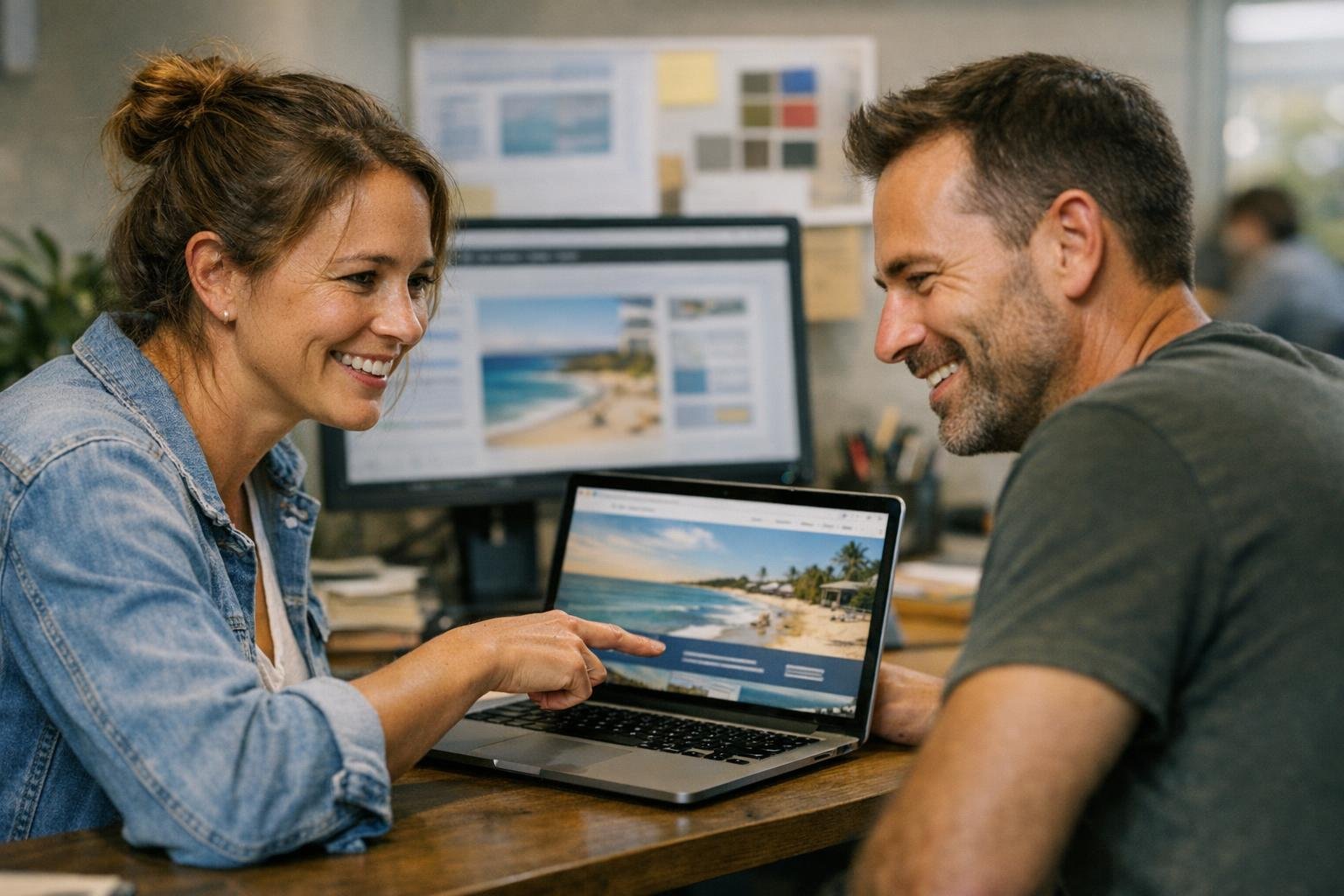
Web Accessibility means designing websites for people with disabilities. They can use these sites just like everyone else. This includes making content work with screen readers. Screen readers are tools that read text aloud. You'll also need keyboard navigation. Videos need captions. And colors need good contrast.
Accessible websites help everyone. Older users benefit. People on slow internet benefit too.
Web accessibility follows international guidelines called WCAG. That's short for Web Content Accessibility Guidelines. These set standards for how websites should work. The guidelines cover four main principles. Perceivable means content must be visible or hearable. Operable means users can navigate the site. Understandable means content must be clear. Strong means websites work with assistive technologies. Assistive technologies are tools that help people use websites.
When websites meet these standards, they're easier for everyone.
In Australia, web accessibility is supported by law. It's called the Disability Discrimination Act. This law requires businesses to provide equal access. That includes online services. So accessible website design is a legal responsibility. This is true for most Queensland businesses.
Why Web Accessibility Matters for Website Design Customers
For Sunshine Coast businesses, accessible design expands your audience. It also improves customer loyalty. People with disabilities have real purchasing power. They're a significant market segment.
When your website is accessible, you welcome more customers. Some use screen readers. Some use voice control. Some use keyboard navigation. Some use other assistive technologies. This directly increases your customer base. It also improves conversion rates.
Accessible websites rank better in search engines too. Search engines prefer clear structure. They like descriptive headings. They like well-labelled images. Screen readers prefer these things as well.
Better accessibility often means better SEO performance. SEO means search engine optimization. That's how people find you online. Accessible design improves usability for everyone. Faster load times help all visitors. Clear navigation helps all visitors. Readable text helps all visitors. These benefits aren't just for people with disabilities.
How Web Accessibility Fits Into Website Design Services in Sunshine Coast
At WebsitedesignSunshinecoast.au, we integrate web accessibility into every website. We design and build sites that work for everyone. Our team ensures your website meets WCAG standards. We include keyboard navigation. We provide alt text for images. Alt text is a description of each image. We use proper heading structure. We maintain sufficient colour contrast.
We test websites with real assistive technologies. This confirms they work for all users.
Whether you need a custom website, we've got you covered. You might need an eCommerce platform. You might need a landing page. Accessibility is built in from the start. We also offer accessibility improvements for existing sites. We help you upgrade older designs. We make them meet current standards.
By choosing accessible website design, you show commitment to inclusivity. You also protect yourself legally. And you improve your bottom line. That's your profit.
Web Accessibility in Practice: A Real-World Example
A Sunshine Coast retail business redesigns its website to be accessible. The new site includes alt text for product images (so screen reader users know what products look like), keyboard-navigable menus (so users who cannot use a mouse can browse), and sufficient colour contrast (so customers with low vision can read prices and descriptions). As a result, the business attracts new customers with disabilities, improves its Google ranking, and reduces bounce rates across the board.
Sources & Further Reading on Web Accessibility
Website Design Services Related to Web Accessibility
Frequently Asked Questions About Web Accessibility
What is the difference between web accessibility and responsive design?
Responsive design makes websites look good on different screen sizes (phones, tablets, desktops). Web accessibility ensures people with disabilities can use the website regardless of device. Both are important—a responsive site that is not accessible still excludes people with disabilities, and an accessible site that does not respond to mobile screens excludes mobile users. The best websites are both responsive and accessible.
Does making my website accessible cost more?
Building accessibility into a website from the start costs very little extra—it is part of good design practice. Retrofitting accessibility into an existing website can be more expensive. By choosing accessible design upfront, Sunshine Coast businesses avoid costly redesigns later and gain the benefits of improved SEO, wider audience reach, and legal compliance immediately.
Who benefits from web accessibility?
People with disabilities—including those with vision loss, hearing loss, mobility challenges, and cognitive differences—benefit directly. But accessible websites also help older users, people on slow internet connections, users in noisy environments (captions help without sound), and people using mobile devices in bright sunlight. In short, everyone benefits from accessible design.
Have Questions About Web Accessibility?
Contact our website design experts in Sunshine Coast for professional guidance.